Requests
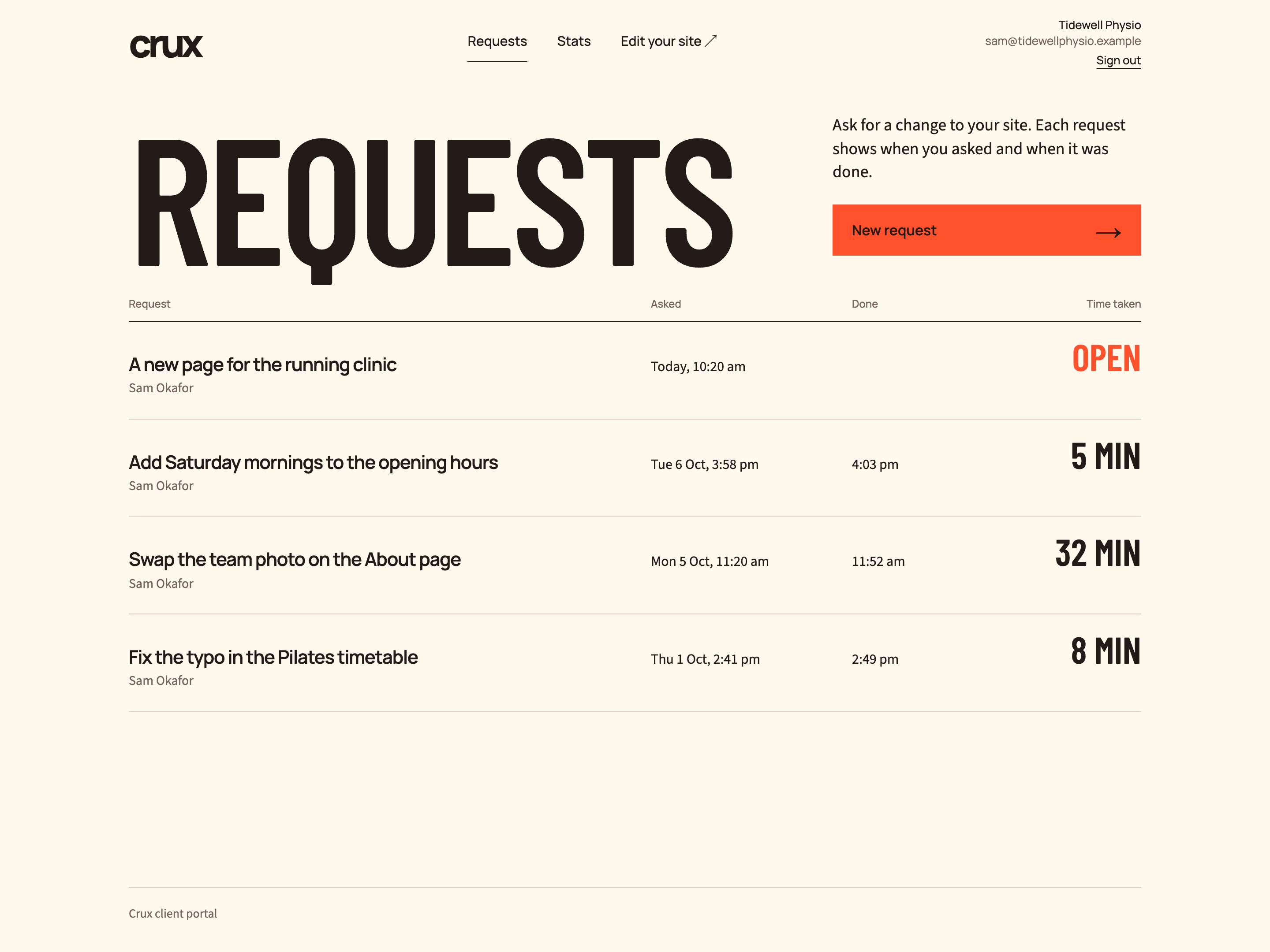
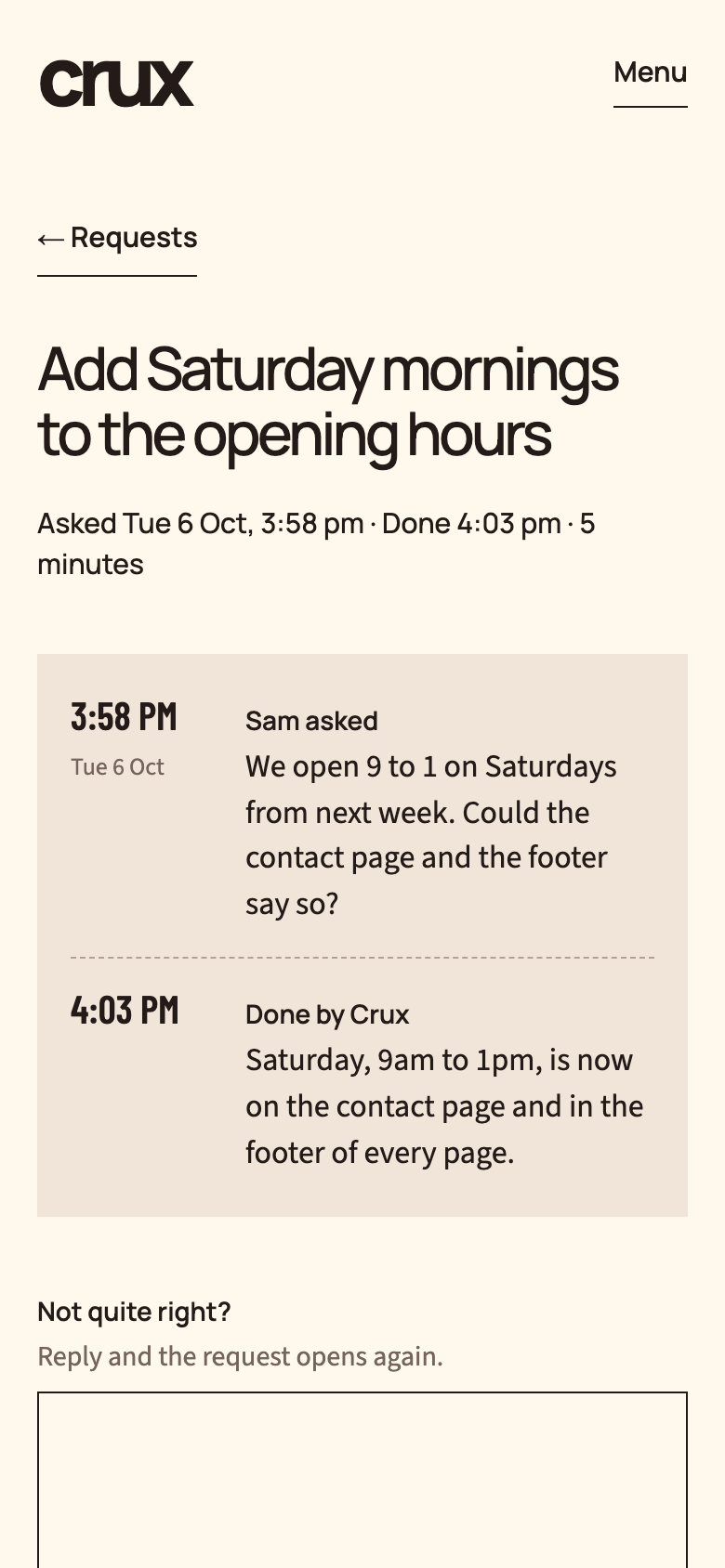
Ask for a change in a sentence or two. The request keeps a timestamped log of when you asked, each reply and when the change was done, so nothing is lost in a message thread.
Built by Crux · Our own product
The Crux client portal is where a practice asks for changes to its website, sees how the site is doing and approves new articles.
Client sign-inThe portal is Crux’s own product, designed and built in-house. The screens on this page show Tidewell Physio, a made-up practice with made-up numbers.
Why we built it
A small website can arrive with an editor from one company, form emails from another and a statistics link from a third. Change requests travel by text message, and new articles turn up as an email attachment.
We wanted a Crux client to have one place instead: somewhere to ask, to check and to approve, under one sign-in and in plain English.
Inside the portal
Ask for a change in a sentence or two. The request keeps a timestamped log of when you asked, each reply and when the change was done, so nothing is lost in a message thread.
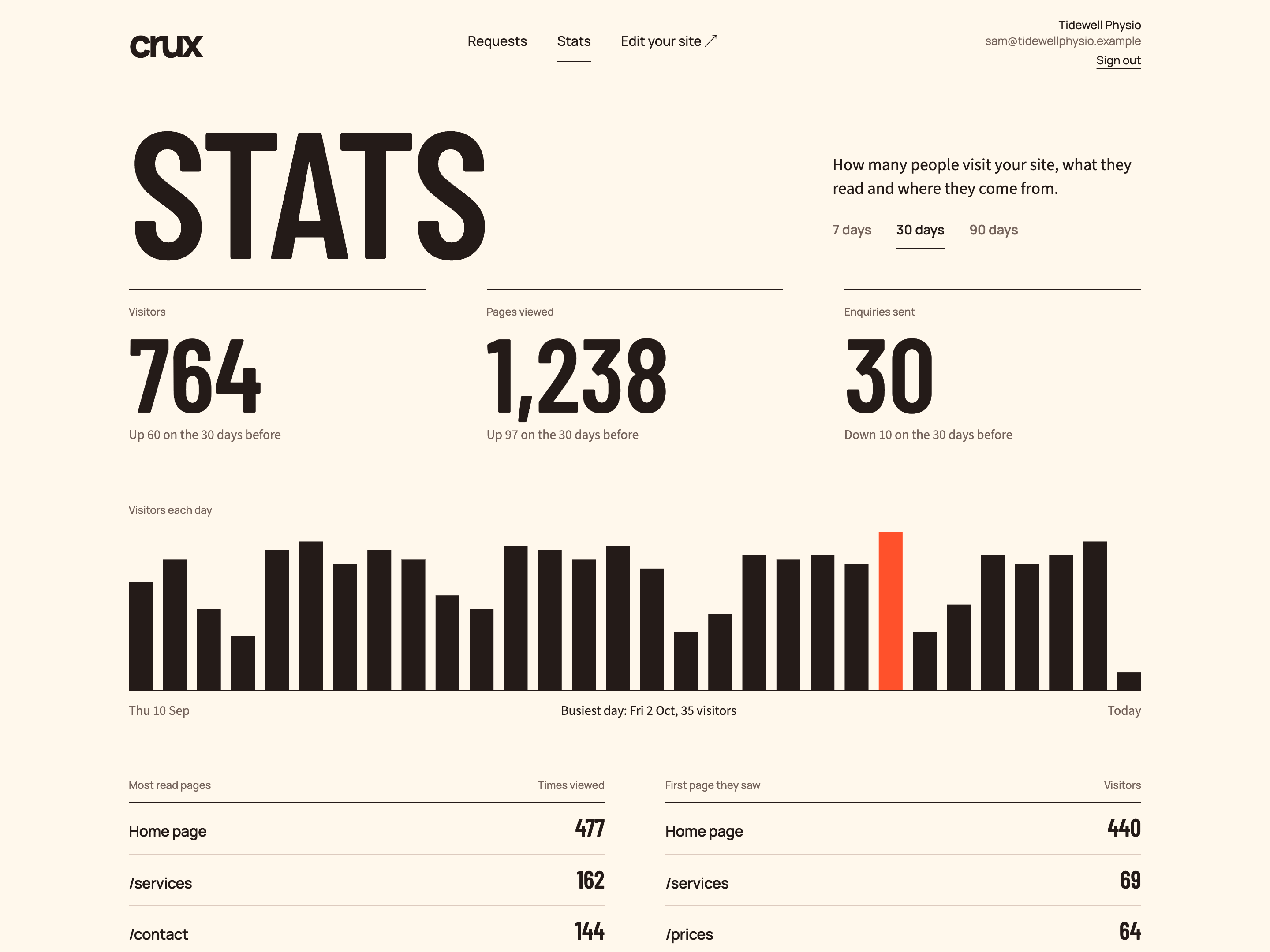
Visitors, pages read, enquiries sent and where people came from, over the last 7, 30 or 90 days. Crux counts these itself, without cookies, and nobody is identified.
Wording, photos, prices and opening hours can be changed by the practice in the editor, without waiting for us. “Edit your site” opens it from the portal.
Crux drafts articles for the site. You read each one as it will appear, edit it or ask for changes, then approve it. Approving publishes it.
Stats a practice can read
Three numbers lead the page: visitors, pages viewed and enquiries sent, each compared with the period before.
Below them are the most-read pages, the first page each visitor saw, the sites and campaign links they came from, and whether they were on a phone or a computer. No cookie is set and nothing is stored in the visitor’s browser.
What this says about Crux
Sign-in is by a link sent to your email, so there is no password to remember. Each practice sees only its own requests, stats and articles. That separation is enforced in the database and tested.
The portal holds nothing about a practice’s patients. Enquiries are counted, never read or stored, and the request form asks people not to include patient details.
We designed and built it ourselves, from the first sketch to the live service. It is how we look after the websites we build, and an example of the software we can build for you.
How we build clinic websitesYour website, looked after
A website you can run without chasing anyone.
Tell us what yours needs to do.