Patient journeys
Clinic website design, built around the patient journey
Help the right patients find you, understand the service and take the next step.
A clinic website should do more than look credible. It should answer the questions people bring to it, make the next step obvious and hand over useful information to the team. Crux brings content, design and development together around that journey.
A useful route into your service
We shape pages around the services you actually offer and the decisions patients need to make. Clear descriptions, relevant proof, practical appointment information and working booking or enquiry routes belong together.
Search foundations include readable page content, descriptive titles, sensible internal links, canonical URLs and a sitemap. The mobile experience matters just as much as the desktop presentation.
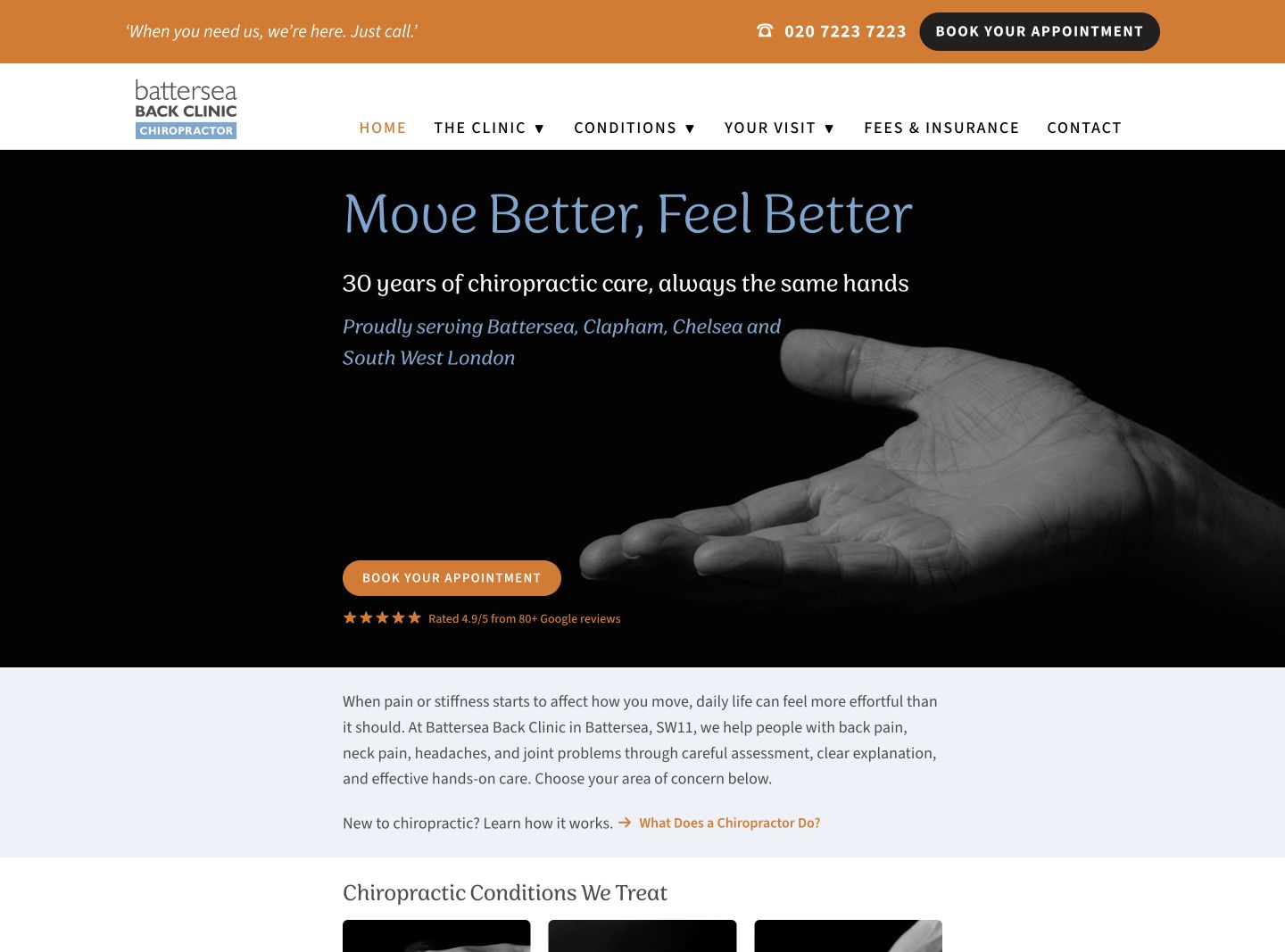
Battersea Back Clinic: from rebuild to AI search
After we rebuilt Battersea Back Clinic’s website, the clinic started appearing in Google AI Mode recommendations for “backache in Battersea”—something they had not seen with the previous site.
The clinic shared the result in September 2026. Read the story behind the search appearance, including what was observed and how to measure the next step from discovery to enquiry.
The website is the front of the service
A successful enquiry can still become an awkward experience if intake, booking and follow-up do not connect. We can work on those steps too: a clearer form, a booking connection, a staff hand-off or a portal for returning patients.
That does not mean every website project needs a software build. It means the design considers where the patient goes next and what the team needs when they arrive.
What a project can cover
- Service structure and patient-facing content.
- Responsive design and hands-on development.
- Search and sharing metadata, crawlability and internal navigation.
- Booking and enquiry routes connected to the service.
- Testing, handover and an agreed approach to ongoing updates.
Start with the journey that matters
Bring your existing website and the service you most want to improve. We can look at how someone finds the relevant information, what makes them hesitate and where they should go next. Scope and timing follow that discussion—not a fixed package full of features you may not need.
From reading to doing
What needs to
work better?
Bring one patient journey, an awkward hand-off or a product idea. Talk it through with Bradley.